Jun 26
ChRIS CLÉiRIGhsemantics, suitable quotations
Halliday & Matthiessen (1999: 604)
But in modelling the semantic system we face a choice: namely, how far “above” the grammar we should try to push it. Since the decision has to be made with reference to the grammar, this is equivalent to asking how abstract the theoretical constructs are going to be. We have chosen to locate ourselves at a low point on the scale of abstraction, keeping the semantics and the grammar always within hailing distance. There were various reasons for this. First, we wanted to show the grammar at work in construing experience; since we are proposing this as an alternative to cognitive theories, with an “ideation base” rather than a “knowledge base”, we need to posit categories such that their construal in the lexicogrammar is explicit. Secondly, we wanted to present the grammar as “natural”, not arbitrary; this is an essential aspect of the evolution of language from a primary semiotic such as that of human infants. Thirdly, we wanted to explain the vast expansion of the meaning potential that takes place through grammatical metaphor; this depends on the initial congruence between grammatical and semantic categories.
But in any case, it is not really possible to produce a more abstract model of semantics until the less abstract model has been developed first. One has to be able to renew connection with the grammar.
Jun 26
ChRIS CLÉiRIGhstratification, suitable quotations
Halliday & Matthiessen (1999: 26):
Thus when we move from the lexicogrammar into the semantics, as we are doing here, we are not simply relabelling everything in a new terminological guise. We shall stress the fundamental relationship between (say) clause complex in the grammar and sequence in the semantics, precisely because the two originate as one: a theory of the logical relationships between processes.
Jun 08
ChRIS CLÉiRIGhepistemology, general observations, suitable quotations
Western thinking for more than two thousand years after Plato was dominated by essentialism. It was not until the nineteenth century that a new and different way of thinking about nature began to spread, so-called population thinking. What is population thinking and how does it differ from essentialism? Population thinkers stress the uniqueness of everything in the organic world. What is important to them is the individual, not the type. They emphasise that every individual in a sexually reproducing species is uniquely different from all others, with much individuality even existing in uniparentally reproducing ones. There is no ‘typical’ individual, and mean values are abstractions. Much of what in the past has been designated in biology as ‘classes’ are populations consisting of unique individuals.
Ernst Mayr ‘The Growth Of Biological Thought‘
May 29
ChRIS CLÉiRIGhinstantiation
1. Think of a system network, such as that of TRANSITIVITY (IFG3 p302). Think of it as coloured black.
2. Now, for example, think of a clause.
3. Now colour green all the features and realisation statements that are selected for that clause.
∞
The term ‘system’ refers to the entire TRANSITIVITY network.
The term ‘instance’ refers to just the green bits.
The term ‘instantiation as process’ refers to the process of applying the colour green.
The term ‘instantiation as scale’ — ‘the cline of instantiation’ — refers to the relation between the entire system and the green bits.
The green bits represent both a subpotential of the system, and the “activation” of that subpotential.
The instance is the “activated” portion of the system. The relation of the instance to the system is the relation of the “activated” portion to the system as a whole.
Cf
Halliday & Matthiessen (1999: 45):
The instance is thus a set of features selected, with associated realisational specifications — an instantial pattern over the potential.
May 28
ChRIS CLÉiRIGhmode and modalities
Thibault’s distinction of ‘body-as-actor’ vs ‘body-as-signifier’ is useful here.
The material order includes the body-as-actor.
The semiotic order includes the meanings realised by the body-as-signifier.
The body-as-signifier participates in the various types of body language.
These include
(1) the sociosemiotic types:
(a) protolinguistic: interactional, regulatory, personal, instrumental
(b) linguistic: redundant with the rhythm or intonation of speech
(c) epilinguistic: textual (eg reference), interpersonal (eg polarity), ideational (eg representation)
(2) manifestations of biosemiosis:
behavioural tokens of sensing: emotive, desiderative, cognitive, perceptive

May 24
ChRIS CLÉiRIGhgeneral observations, mode and modalities
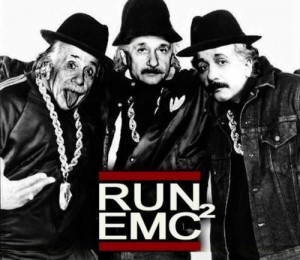
E=mc²
Energy equals mass [multiplied by the speed [of light [squared]]].
This is an intensive identifying relational clause.
The Value is realised by a nominal group with a Qualifier involving three levels of embedding.
(i.e. yes)
May 22
ChRIS CLÉiRIGhgeneral observations, mode and modalities
CH4 + 2 O2  CO2 + 2 H2O
(one molecule of) methane and (two molecules of) oxygen yields (one molecule of) carbon dioxide and (two molecules of) water.
This is a causal circumstantial identifying relational clause.
The Token and Value are both realised by nominal group complexes in each of which the relation between the nominal groups is paratactic extension.
(i.e. yes)
May 22
ChRIS CLÉiRIGhgeneral observations, mode and modalities
Each mathematical equation is an intensive identifying clause.
The entire derivation is a clause complex of paratactic elaboration.
The solution of a derivation is a decoding identifying clause
in which the unknown (x) functions as a Token identified by a mathematical Value.
(i.e. yes)
May 21
ChRIS CLÉiRIGhinstantiation, realisation

Instantiation: this guy is an idiot = Carrier ^ Attribute (ascription: Token ^ Type)
Realisation: he‘s the idiot = Token ^ Value (identification)
Older Entries Newer Entries
 RSS
RSS

Recent Comments