May 29
ChRIS CLÉiRIGhinstantiation
1. Think of a system network, such as that of TRANSITIVITY (IFG3 p302). Think of it as coloured black.
2. Now, for example, think of a clause.
3. Now colour green all the features and realisation statements that are selected for that clause.
∞
The term ‘system’ refers to the entire TRANSITIVITY network.
The term ‘instance’ refers to just the green bits.
The term ‘instantiation as process’ refers to the process of applying the colour green.
The term ‘instantiation as scale’ — ‘the cline of instantiation’ — refers to the relation between the entire system and the green bits.
The green bits represent both a subpotential of the system, and the “activation” of that subpotential.
The instance is the “activated” portion of the system. The relation of the instance to the system is the relation of the “activated” portion to the system as a whole.
Cf
Halliday & Matthiessen (1999: 45):
The instance is thus a set of features selected, with associated realisational specifications — an instantial pattern over the potential.
May 28
ChRIS CLÉiRIGhmode and modalities
Thibault’s distinction of ‘body-as-actor’ vs ‘body-as-signifier’ is useful here.
The material order includes the body-as-actor.
The semiotic order includes the meanings realised by the body-as-signifier.
The body-as-signifier participates in the various types of body language.
These include
(1) the sociosemiotic types:
(a) protolinguistic: interactional, regulatory, personal, instrumental
(b) linguistic: redundant with the rhythm or intonation of speech
(c) epilinguistic: textual (eg reference), interpersonal (eg polarity), ideational (eg representation)
(2) manifestations of biosemiosis:
behavioural tokens of sensing: emotive, desiderative, cognitive, perceptive

May 24
ChRIS CLÉiRIGhgeneral observations, mode and modalities
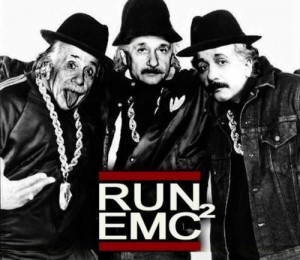
E=mc²
Energy equals mass [multiplied by the speed [of light [squared]]].
This is an intensive identifying relational clause.
The Value is realised by a nominal group with a Qualifier involving three levels of embedding.
(i.e. yes)
May 22
ChRIS CLÉiRIGhgeneral observations, mode and modalities
CH4 + 2 O2  CO2 + 2 H2O
(one molecule of) methane and (two molecules of) oxygen yields (one molecule of) carbon dioxide and (two molecules of) water.
This is a causal circumstantial identifying relational clause.
The Token and Value are both realised by nominal group complexes in each of which the relation between the nominal groups is paratactic extension.
(i.e. yes)
May 22
ChRIS CLÉiRIGhgeneral observations, mode and modalities
Each mathematical equation is an intensive identifying clause.
The entire derivation is a clause complex of paratactic elaboration.
The solution of a derivation is a decoding identifying clause
in which the unknown (x) functions as a Token identified by a mathematical Value.
(i.e. yes)
May 21
ChRIS CLÉiRIGhinstantiation, realisation

Instantiation: this guy is an idiot = Carrier ^ Attribute (ascription: Token ^ Type)
Realisation: he‘s the idiot = Token ^ Value (identification)
 RSS
RSS

Recent Comments